
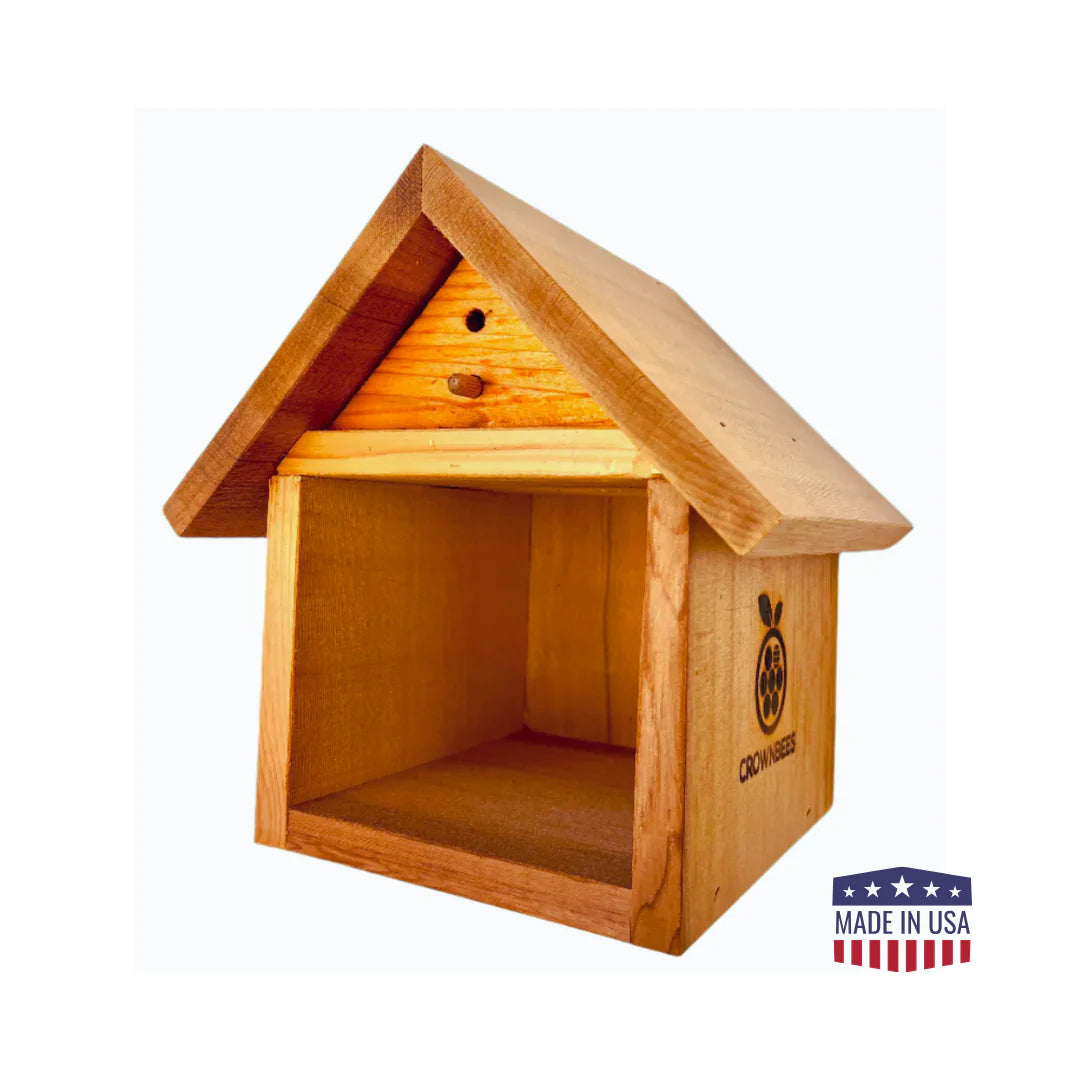

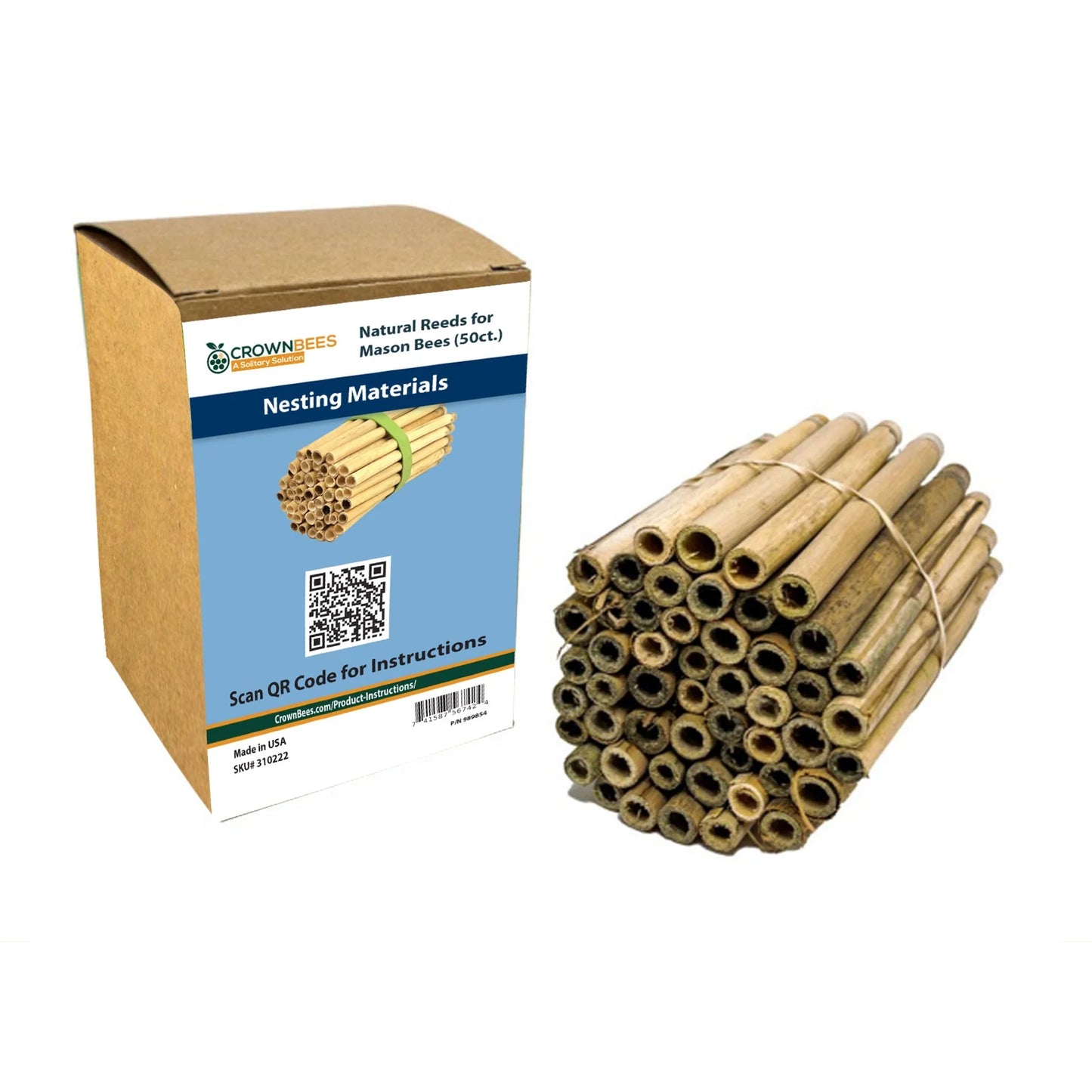

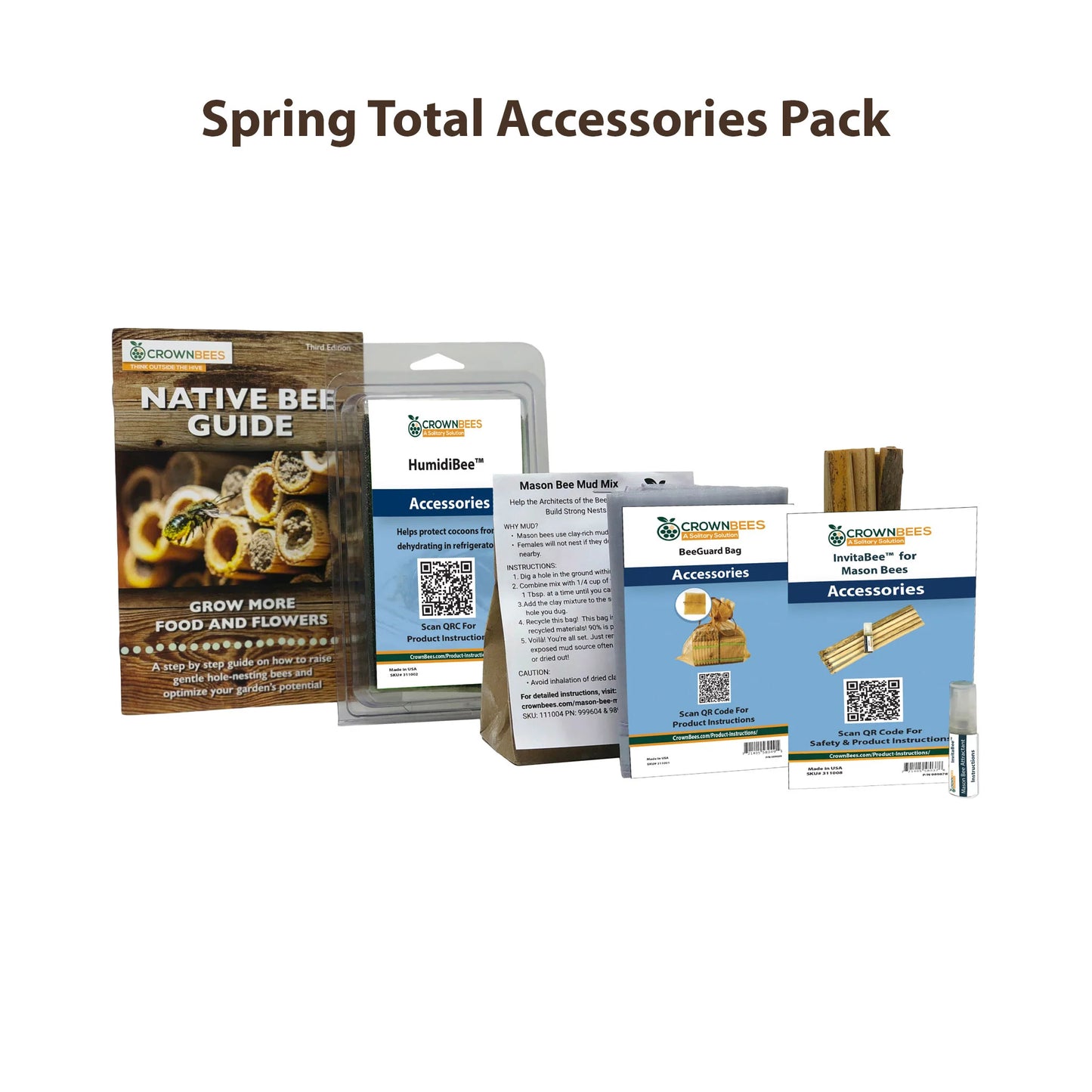
How Nesting Materials Affect Mason & Summer Leaf Bee Health

Nesting materials do more than give bees a place to lay eggs. Tube diameter, cavity length, breathability, and whether the nest can be opened all influence survival rates, how many females emerge, and the long-term health of future generations.
Choosing the right bee-safe materials helps protect developing bees from pests and disease while supporting healthier pollination year after year.
Here, ‘bee-safe’ refers to the Crown Bees BeeSafe™ Standard (BeeSafe™ Nesting System + BeeSafe™ Seasonal Care).
Quick Summary
Bee-safe nesting materials are sealed at one end, breathable, thick-walled, and easy to open for harvesting. Mason bees prefer ~8mm cavities, Summer Leaf bees prefer ~6mm cavities, and nesting materials around 6 inches long help produce more females and healthier bees.
What “Bee-Safe” Nesting Materials Really Means
Cavity-nesting solitary bees naturally nest in hollow or pithy plant stems or existing insect holes. Well-designed artificial nesting materials can safely replicate these conditions when built correctly.


Nesting materials should be sealed at one end, breathable, thick-walled, and easy to open. These features help protect developing bees from excessive mold, chalkbrood, parasitic wasps, and pollen mites.
Tube Diameter and Length: Small Details, Big Outcomes
Diameter guides which bees move in
Each species has a preferred nesting diameter. Providing the correct size improves nesting activity and overall success. See our preferred nesting diameter guide.
Length influences female production
Nesting materials around 6 inches long support higher female ratios. Shorter cavities often result in more males and fewer offspring.
- Mason Bees: ~8mm
- Summer Leaf Bees: ~6mm
- Wild Bees: mixed sizes encourage diversity
Breathability and Moisture Control
Breathable materials allow moisture to escape, reducing mold and improving cocoon survival. This is a key advantage of paper and reed-based nesting materials.
Watch: Nesting Materials and Seasonal Care
This video walks through nesting materials and how seasonal care supports healthier bees year after year.