



Buying Guide
Getting Started with Solitary Bees
Solitary bees are gentle, easy to raise, and fantastic cross-pollinators for backyard gardens, farms, and orchards. This guide keeps it simple and points you to deeper learning when you want it.
Start with BeeSafe™ Nesting Standard materials and follow BeeSafe™ Seasonal Care to keep your bees healthy year after year, as defined in the Crown Bees BeeSafe™ Standard.
Welcome! You're in the right place
We're so happy you're interested in solitary bees. They're perfect pollinators for backyard gardens, farms, and orchards because they're gentle, easy to raise, and fun to watch. They're also superb cross-pollinators that can double or even triple your yields.
We know getting started can feel daunting with so many products and so much advice. How do you know what to choose and where to begin? How can you tell BeeSafe™ nesting materials and practices apart from options that are poorly made and harmful to bees?
Crown Bees is a leader in native pollinator stewardship, providing education, conservation programs, and regionally appropriate solutions for supporting solitary bees. We work with beekeepers, researchers, universities, nonprofits, and government agencies to stay current on the challenges facing managed and native bees, and we bring those best practices to you.


Bee health standard
The BeeSafe™ Nesting Standard
Part of the Crown Bees BeeSafe™ Standard, our science-based framework for safer cavity-nesting bee habitat. Bee housing designed for health, not just garden décor.
- Sealed at one end so pests can't sneak in through the back
- Breathable materials that dry out after rainstorms
- Easy to open so you can harvest cocoons and reduce pests and disease
- Bee-sized nesting holes and length for healthy nesting success
- Replaceable or cleanable nesting so problems don't build up year after year

What you'll need
Every bee raiser needs four things. Here's what to look for in each.
 Step 1
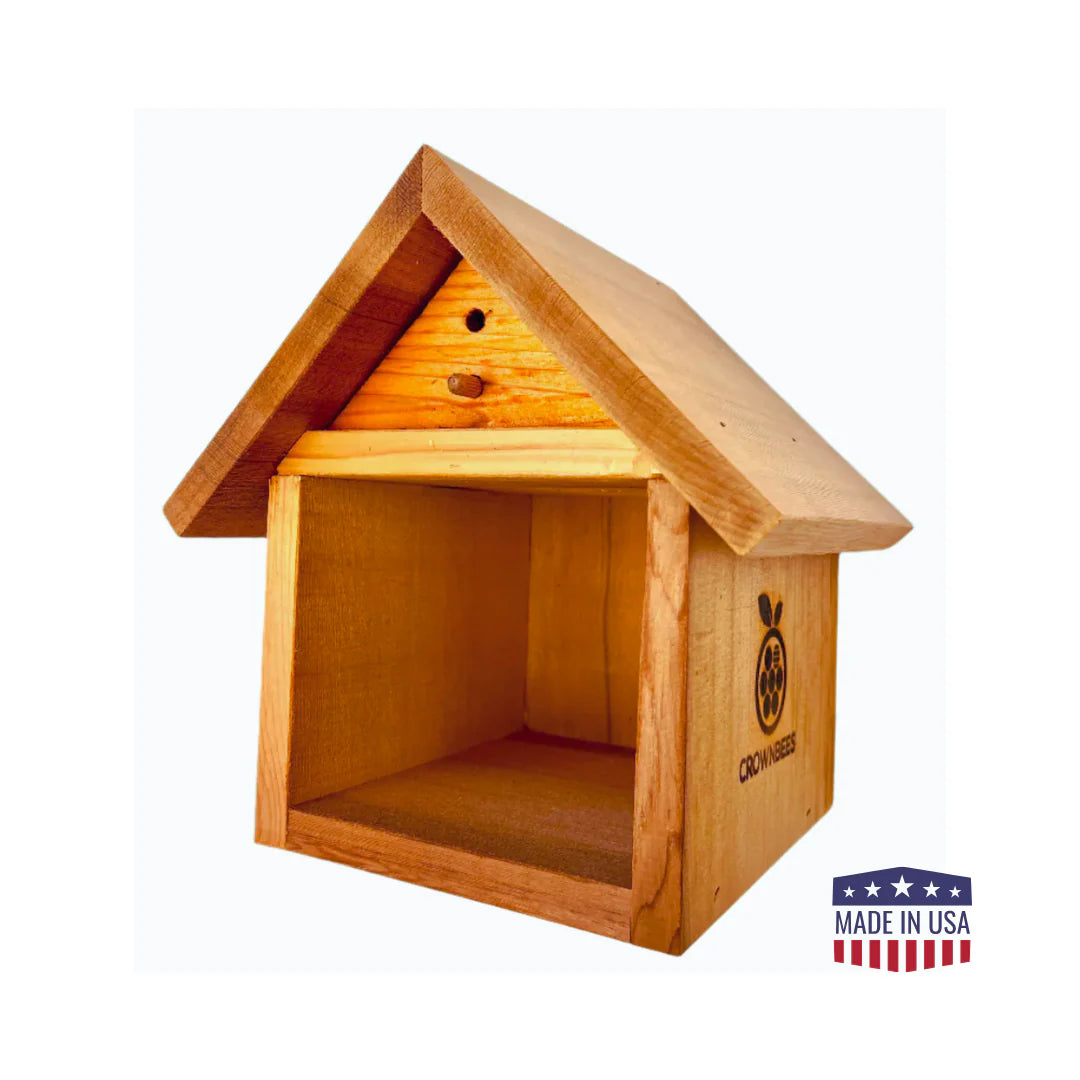
Bee house
Weather-resistant and mounted on a sturdy surface, like the side of a house or a fence.
Shop bee houses Step 2
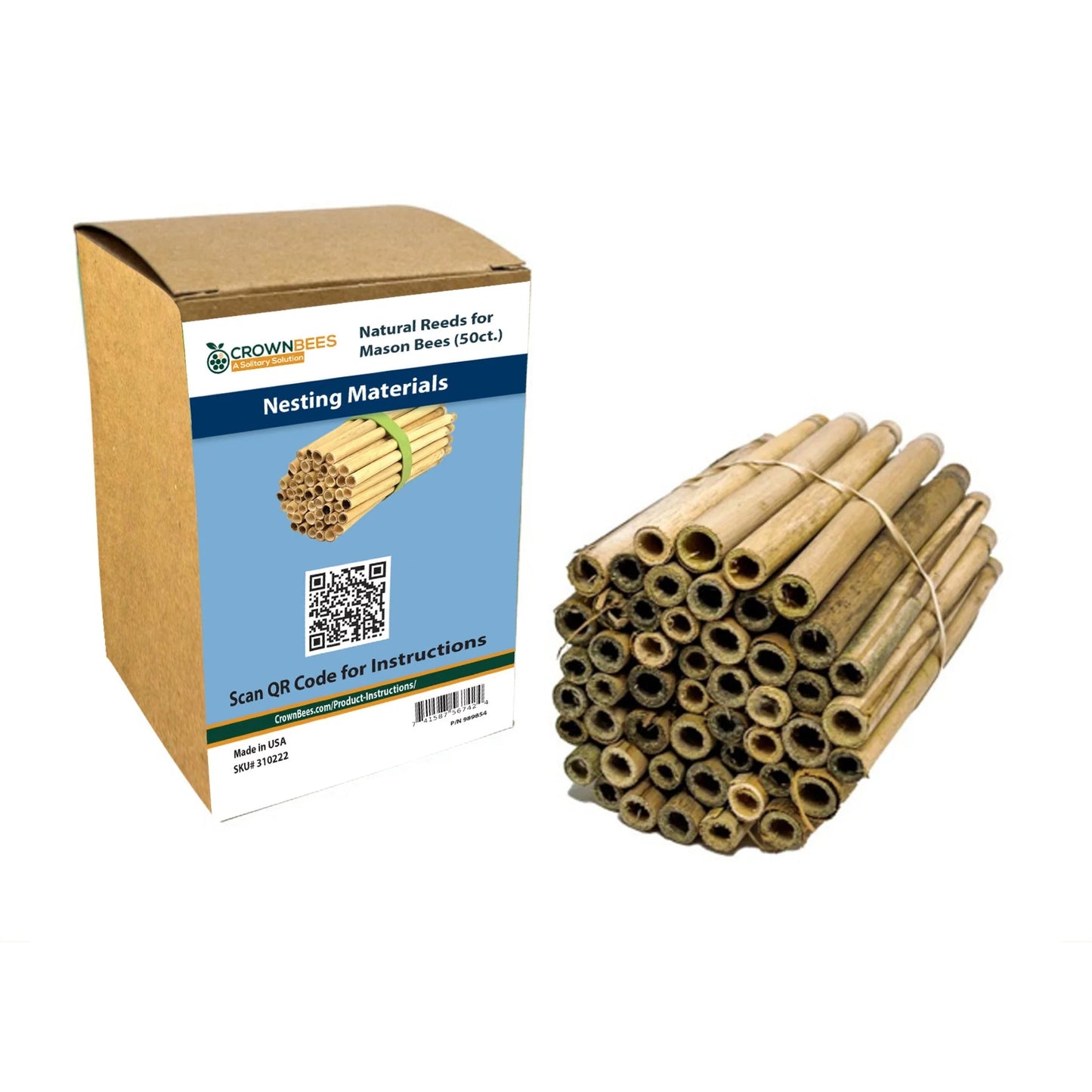
Nesting materials
Breathable, sealed at one end, and easy to open for cocoon harvest.
Shop nesting materials Step 3
Bees
The right bee at the right time for your blooms: Mason bees in spring, Leafcutter bees in summer.
Shop bees
Get seasonal reminders
Twice a month, BeeMail sends seasonal reminders and tips so you never have to guess what to do next.
Complete kits: everything you need in one box
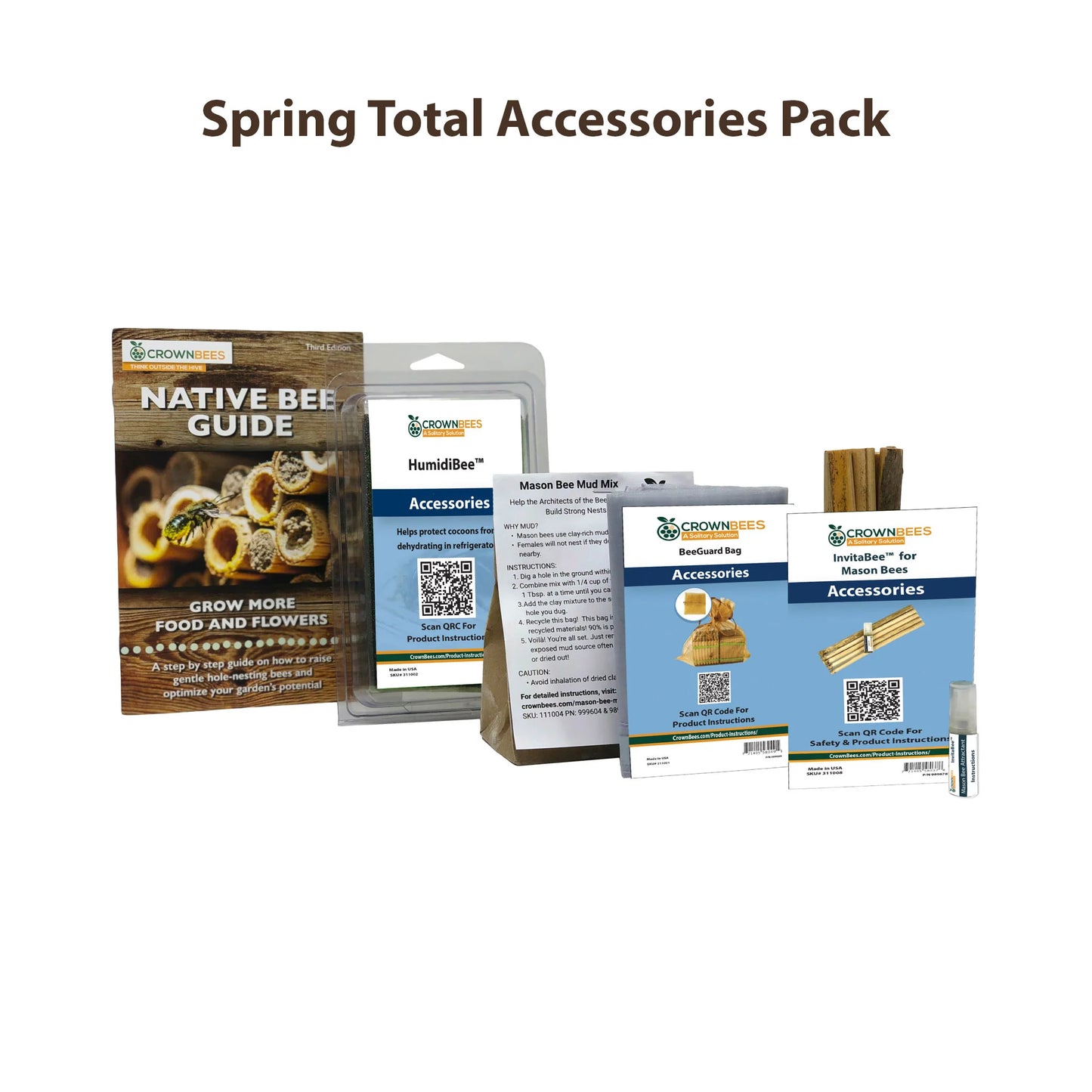
Each kit comes with all four essentials: a cedar bee house, nesting materials, accessories, and bees. Choose Mason bees, Leafcutter bees, or both, and pick the date your bees ship.
 Starter
Cabana Starter Kit with Bees
Our best seller and the easiest way to start. A small hex house that holds 50 reeds, great for small gardens and balconies.
Shop Cabana Starter Kit
Classic
Chalet Kit with Bees
A peaked-roof house that holds 125 reeds or a wood tray, with an attic for releasing cocoons.
Shop Chalet Kit Large
Villa Kit with Bees
A large hex house that holds 125 reeds or a wood tray, with room to grow your bee population.
Shop Villa Kit Largest
Tower Kit with Bees
Our biggest house, holding up to 250 large reeds, for experienced bee raisers and small orchards.
Shop Tower Kit