



Crown Bees Community Science Project
Conservation Biologists Need You!
Explore, observe, and record solitary cavity-nesting bees where you live. The Crown Bees Community Science Project was created to find the who, what, when, and where of wild, solitary cavity-nesting bees across the continental United States.
Every photo you share on iNaturalist helps scientists understand these bees and protect them for future generations.
Our projects
First Flight of Solitary Cavity Nesting Bees
Our main goal is to spot the first springtime appearances of solitary cavity-nesting bees in your area. Capture the moment with photos of the first flowers the bees visit and the places they choose to nest.
Houdini Fly
In April 2024, we added a second project to track the Houdini Fly (Cacoxenus indagator), an invasive parasite of Mason bees. Your sightings help us map where it has spread. Not sure what you're looking at? See our Houdini Fly identification guide.
Why your photos matter
Scientists rely on the photos you share to understand and protect biodiversity. Your observations shape the policies and conservation strategies that decide how bee habitat is protected, and they add to what we know about sustainable practices and endangered species.
Crown Bees and iNaturalist share the same goal: supporting pollinators. Today's curiosity becomes tomorrow's knowledge about wild, solitary cavity-nesting bees.
How it works
Share your photos of wild solitary cavity-nesting bees on iNaturalist, a free platform where people record what they see in nature. Once you upload a photo, iNaturalist suggests what kind of bee it is, and experts in the community help confirm the ID.
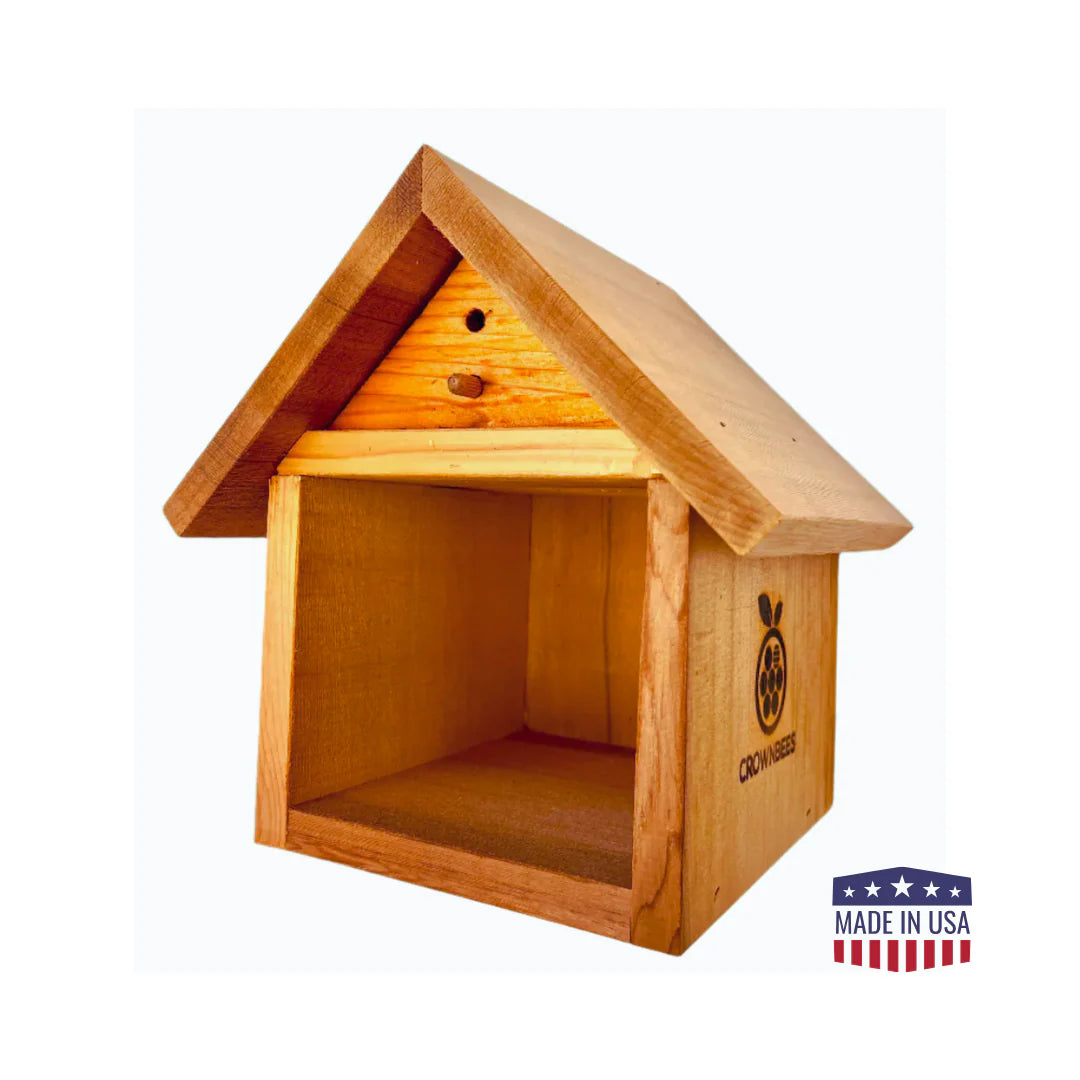
Your backyard bee house counts, and so does a bee you spot on a neighborhood walk, a hike, or a summer trip.
How to join
- Create an account on iNaturalist.
- Watch the video tutorials to learn how to upload and document your findings.
- Join a project: First Flight of Solitary Cavity Nesting Bees or Houdini Fly.
- Take photos of the bees and the plants around them.
- Upload to iNaturalist and add them to the project.
- Join the conversation with fellow scientists and nature lovers.
See which bees have been spotted near you
Our Where the Wild Bees Are tool pulls iNaturalist observations for your city, so you can see which cavity-nesting bees and beneficial wasps are already in your area before you head outside.