


Harmful Nesting Materials: What to Avoid (and What to Use Instead)
Backyard “bee hotels” are everywhere. It’s wonderful that people care and want wild bees to thrive. When we invite bees into our backyards, we become responsible for providing safe shelter. Some common nesting materials, though well intentioned, can harm wild bees. These include materials that trap moisture, harbor pests, or cannot be cleaned.
With thoughtful, simple choices, we can give bees the safe shelter they need. The outer bee house design matters less than the nesting materials inside.
If you started with what was easiest to find, you’re not alone. This guide shows how small changes can make a big difference for bee health.
Choose nesting materials that are sealed at one end, breathable, and easy to open for cleaning. BeeSafe™ means following the Crown Bees BeeSafe™ Standard: the BeeSafe™ Nesting System plus BeeSafe™ Seasonal Care.
Why Nesting Materials Matter
Breathable nesting materials help prevent mold. When nesting materials can be opened in the fall, you're able to harvest mason bee cocoons and reduce chalkbrood, pollen mites, and other pests.
When you put up a bee house, think of it like any other garden project, a little seasonal care goes a long way in keeping bees healthy and coming back year after year.
- Use nesting tubes, reeds, or wood trays that are sealed at one end, breathable, and can be opened for care.
- Plan on a little fall maintenance, harvest cocoons and store them safely overwinter.
Crown Bees BeeSafe™ Nesting Standard
Our science-based framework for choosing nesting materials that support the health of cavity-nesting solitary bees.
Bee housing designed for health, not just garden décor.
- Sealed at one end so pests can't sneak in through the back.
- Breathable materials that dry out after rainstorms.
- Easy to Open so you can harvest cocoons and reduce pests and disease.
- Bees sized tunnels and length for healthy nesting success.
- Replaceable or cleanable nesting so problems don't build up year after year.
See the Difference
Plastic Straws
- Plastic doesn't breathe, so moisture gets trapped and mold grows.
- Single-use waste that's not reusable or compostable, and often ends up as trash.
Fails the BeeSafe™ Standard because plastic isn't breathable.
- Use them for one season, then switch to openable, breathable nesting materials.
- Give your bee house a sunnier, drier spot to help keep moisture in check. Bees love good ventilation, too.
- Before next season rolls around, switch to nesting materials you can open, harvest, and clean. Your future bees will thank you.
Drilled Wood Blocks
Drilled wood blocks are commonly used in bee houses, but they create long-term health challenges for cavity-nesting bees.
- Can't be opened, so you can't harvest cocoons.
- Pests build up year over year, more mold, chalkbrood, and mites.
-
Hard to dry fully after rain, so moisture can stay trapped deep in tunnels.
Fails the BeeSafe™ Standard because solid blocks can't be opened and cleaned, making bees start the next season in dirty homes. Health-wise? Not so much.
- Add paper inserts if possible so cocoons can be removed.
- Upgrade to openable trays or tubes for long-term bee health.
Cardboard Tubes Glued into Bee House
Cardboard tubes glued into bee houses are commonly used, but they make cocoon harvesting and cleaning difficult.
- Glued seams tear, crush, or stick, which can damage cocoons.
- Adhesives and coatings vary, making quality inconsistent across brands.
Fails the BeeSafe™ Standard because tubesthat are glued into the bee house can't be removed or reliably opened, making bee care harder than it needs to be.
- Use for a single season.
- Do not attempt to force tubes open if they resist.
- Switch to removable and openable nesting materials next season for easier harvesting and cleaning.
Decorative Mixed-Media Insect Hotels
Decorative mixed-media insect hotels are often designed for appearance rather than long-term bee health.
- Designed for looks first, not for bee health or seasonal care.
- Use problem materials, bamboo, glued tubes, and drilled blocks.
- Can't be cleaned so pests and disease build up season after season.
-
Wrong tunnel sizes and lengths, reducing nesting success.
Fails the BeeSafe™ Standard, decorative hotels prioritize appearance over bee health and usually rely on materials that can’t be opened, cleaned, or cared for properly.
- Remove and replace with bee-safe materials. Watch this video on transitioning to a healthy bee house.
Bamboo Reeds
- Bamboo is tough to open; cocoons and fingers are hurt!
- Problems stay hidden as unopened bamboo can hide pests like pollen mites and disease like chalkbrood until it is too late.
- Wrong size: many bamboo reeds are too short (4–5") and too wide for most species.
Fails the BeeSafe™ Standard because bamboo is difficult to open without damaging cocoons.
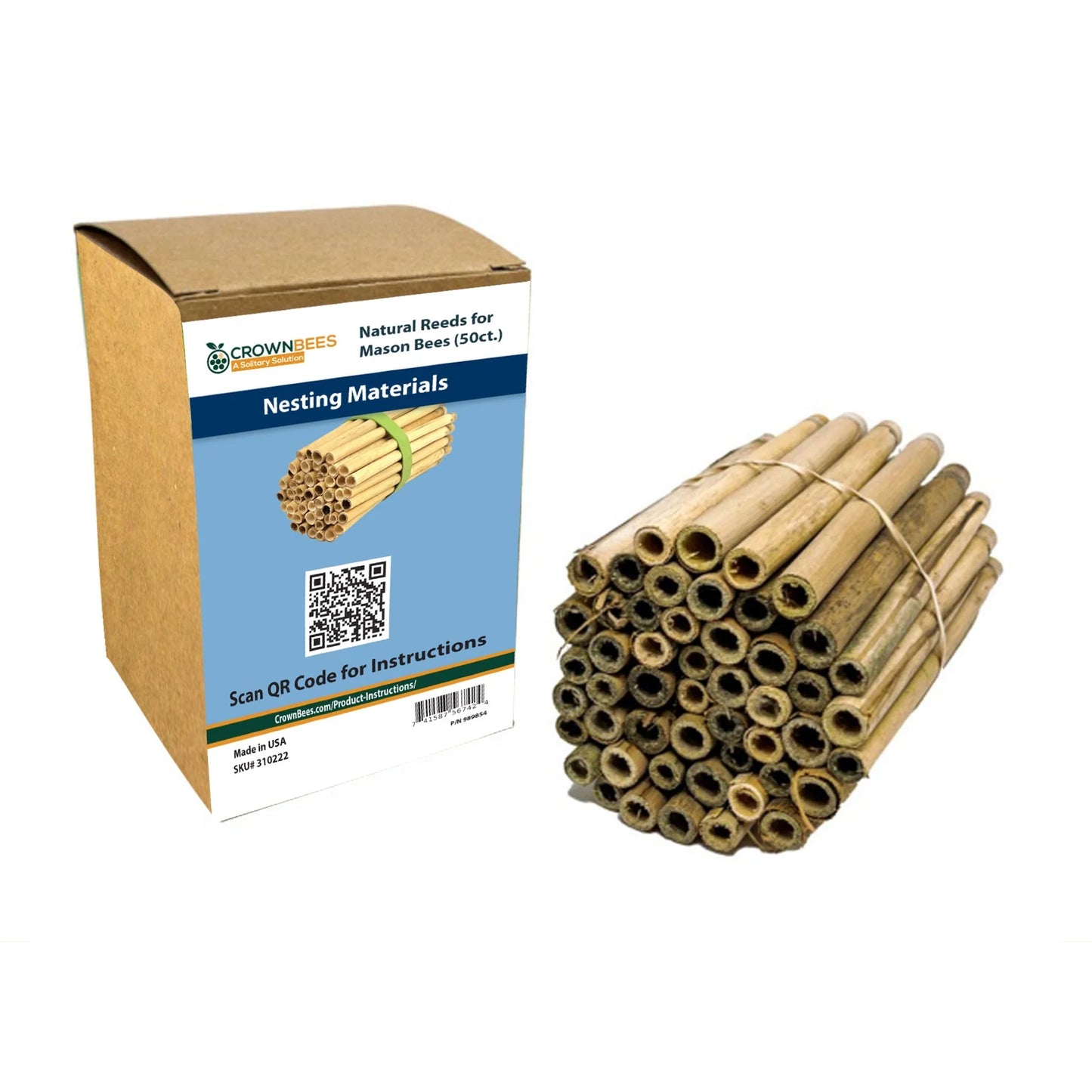
Better natural options (easier to open): Phragmites, Asters, Bee Balm, Cup Plant, Honeysuckle, Joe-Pye Weed, Raspberry or Blackberry, Sumac, Sunflower, Wild Rose.
ProTip: Seal one end with clay or mud so pests cannot enter from the back.
- If the bamboo is already occupied then use for only one season. Let the bees emerge into a bee guard bag, then release them so they don't don’t head back into dirty bamboo.
- Resist the urge to split bamboo unless you have the right tools and experience (bamboo fights back).
- For next season, upgrade to easy-to-open natural reeds or switch to openable trays or tubes for happier, healthier bees
What to Use Instead
Choose bee-safe nesting materials that are breathable and easy to open, so caring for your bees stays simple. With a little seasonal care, you’ll dramatically reduce pests and set up your healthier bees year after year.
Shop Nesting MaterialsCrown Bees is a leader in native pollinator stewardship, offering education, conservation programs, and regionally appropriate solutions that support solitary bees and protect local biodiversity.